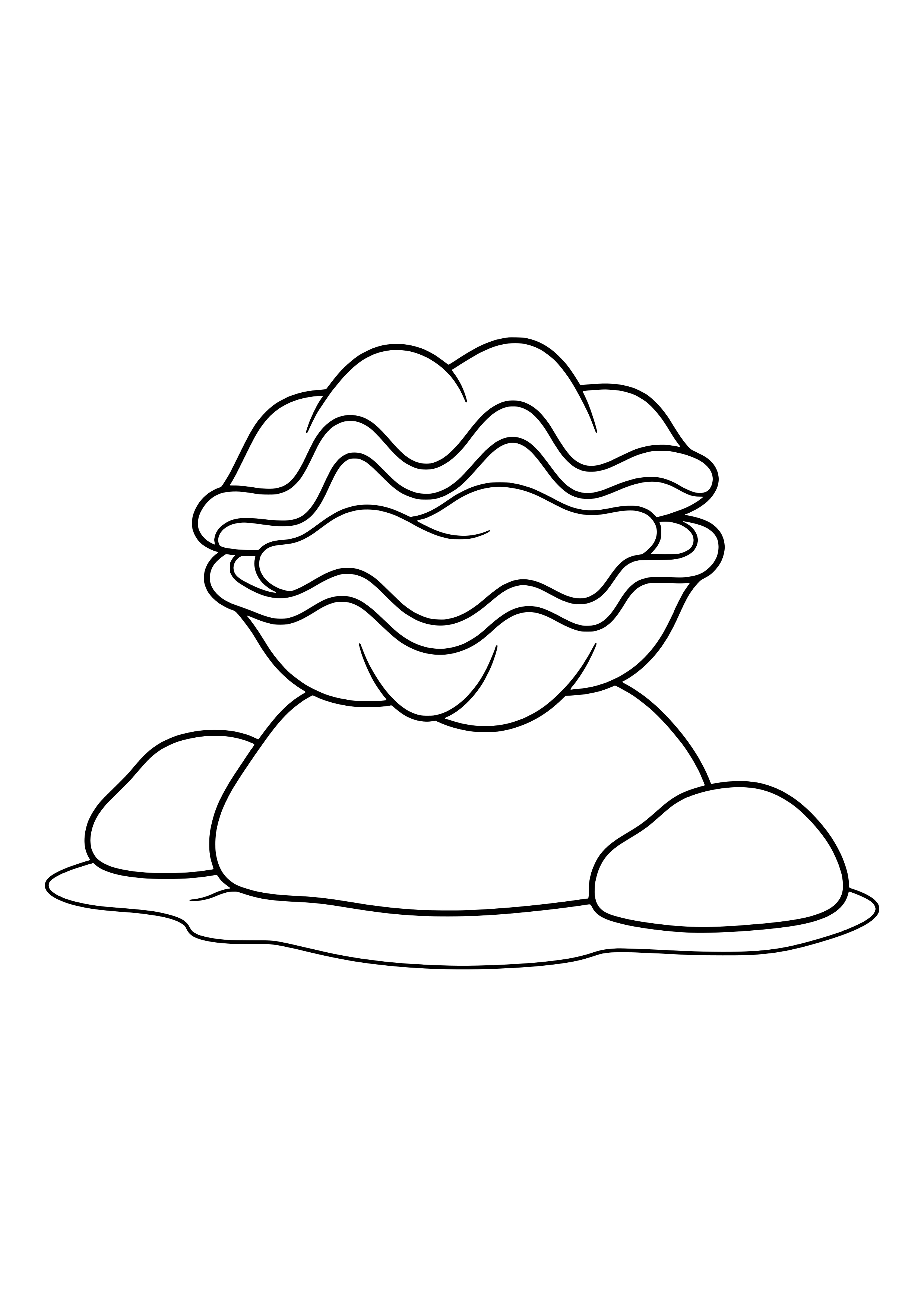
With its wavy, colorful edge, this magnificent giant clam rests majestically on the reef floor — one of the largest clams in the world's oceans. Its impressive size and intricate wavy lines make it one of the most striking residents of any coral reef. Our giant clam coloring page captures exactly this impressive design, and you can print it for free right away.
Why This Coloring Page Offers So Much Color
The wavy, ridged edge of the giant clam offers many exciting lines to color and invites experimenting with unusual, vivid color combinations, since real giant clams in nature often show remarkably colorful patterns. The soft, open mantle inside also leaves plenty of room for creative color gradients.
An impressive giant creature
Great for creative color combos
Many exciting lines to color
Clear shapes that are easy to coordinate
🖨️ Step-by-Step: How to Print Perfectly
Click "Print Now" and set your printer to black & white to save ink!
Use thicker paper (100–120gsm) for markers so colors don't bleed through
A quiet spot with good light — a washable tablecloth is gold for little artists!
Talk together about how big a real giant clam can grow!
🐚 Fun Facts About the Amazing Giant Clam
While your child colors, here's a great moment for a little story: giant clams are among the largest clams on Earth, growing over a meter wide and weighing several hundred kilograms. Unlike old legends about "man-eating giant clams" claim, these gentle giants are completely harmless, since they close far too slowly to trap anyone. Giant clams owe much of their remarkable size to tiny algae that live in their tissue and provide extra energy through photosynthesis — much like corals do. This close partnership between clam and algae is a fascinating example of symbiosis in the ocean. Some giant clams can also live for over a hundred years, growing steadily throughout their lives, making the oldest specimens some of the longest-living residents of the entire reef. Anyone who wants to learn more about this impressive giant creature can explore the giant clam profile on Wikipedia together.
🎨 Creative Idea: What to Do with the Finished Picture?
Is the giant clam all colored in? It deserves a place of honor on the wall! Afterward, talk about how old sailors' legends were sometimes exaggerated, and what was actually true about them. ✂️
🎨 Which Colors Suit the Giant Clam?
For this colorful design, feel free to use unusual, vivid shades! Here are our favorite color ideas for little artists:
For the soft mantle inside
For unusual patterns
For the outer shell
For the water around it
💡 Coloring Technique Tip: Color the inner mantle with several different shades — real giant clams often have remarkably colorful, speckled patterns.
📅 When Is This Coloring Page a Great Fit?
This design is a true all-rounder — here are our favorite occasions:
An impressive design for little ocean fans
Perfect for talking about partnerships in nature
The large area makes for long, satisfying coloring time
Perfect for the theme of old stories
An exciting topic for little explorers
🐚 Fun Facts About Giant Clams for Kids
While your child colors, read these facts out loud — kids love nature trivia!
One of the biggest clams on Earth
Contrary to old legends, safe to be near
A fascinating symbiosis
Some giant clams live remarkably long
The mantle often shows vivid patterns
🦀 Discover the Whole Ocean World!
The giant clam fits perfectly with our new collection of shellfish and mollusks! Combine several coloring pages and build a whole ocean world:
🌊 The Complete Shellfish Pack:
🌿 The Special Partnership Between Clam and Algae
The tiny algae living inside the giant clam are called zooxanthellae, and they're a genuine win for both partners: the algae get a protected home and important nutrients from the clam's metabolism, while in return, the clam gains valuable energy from the algae's photosynthesis. This same principle is well known from corals, which also live closely with these kinds of algae. If this partnership breaks down due to water that's too warm, the giant clam loses its vivid colors — a warning sign researchers also watch for on coral reefs.
🛡️ Why Giant Clams Are Specially Protected Today
Because giant clams are so striking and sought after, they were over-collected in many regions of the world, causing their populations to shrink significantly. Today, giant clams are specially protected in many countries, and collecting or trading them is strictly regulated. Conservation projects also work to raise young giant clams in special hatcheries before releasing them back into protected reef areas, so future generations can marvel at these impressive giants too.
Your Benefits at PureSketchy:
- Thick Outlines: Clear lines for the shell and mantle.
- Free to Print: Over 500 designs available instantly, no sign-up required.
- Safe & Fast: Instant access to PDF-optimized WebP previews.
- Suitable for All Ages: A colorful design, especially great for ages 5-8.
Frequently Asked Questions (FAQ)
What age is this coloring page suitable for?
The giant clam works especially well for children ages 5 to 8 — the clear shapes are easy to coordinate.
Is the download free?
Yes, all coloring pages on PureSketchy are 100% free for personal use, preschools, and schools.
Which coloring tools work best?
We recommend bold turquoise and violet tones for the mantle, and warm brown for the shell.
Are giant clams really dangerous?
No, that's a myth! Giant clams close far too slowly to trap anyone — they are completely harmless, peaceful giants.
Is there a German/English version?
Yes! You can find the German version at Ausmalbild Riesenmuschel am Riffboden.
Can giant clams close completely?
Yes, but only very slowly over several minutes — nowhere near fast enough to trap a diver or swimmer, which is exactly why the old legends about them are pure myth.
How long does a giant clam take to fully close?
It can take several minutes for a giant clam to close completely — plenty of time for anyone to simply swim away without any trouble at all.