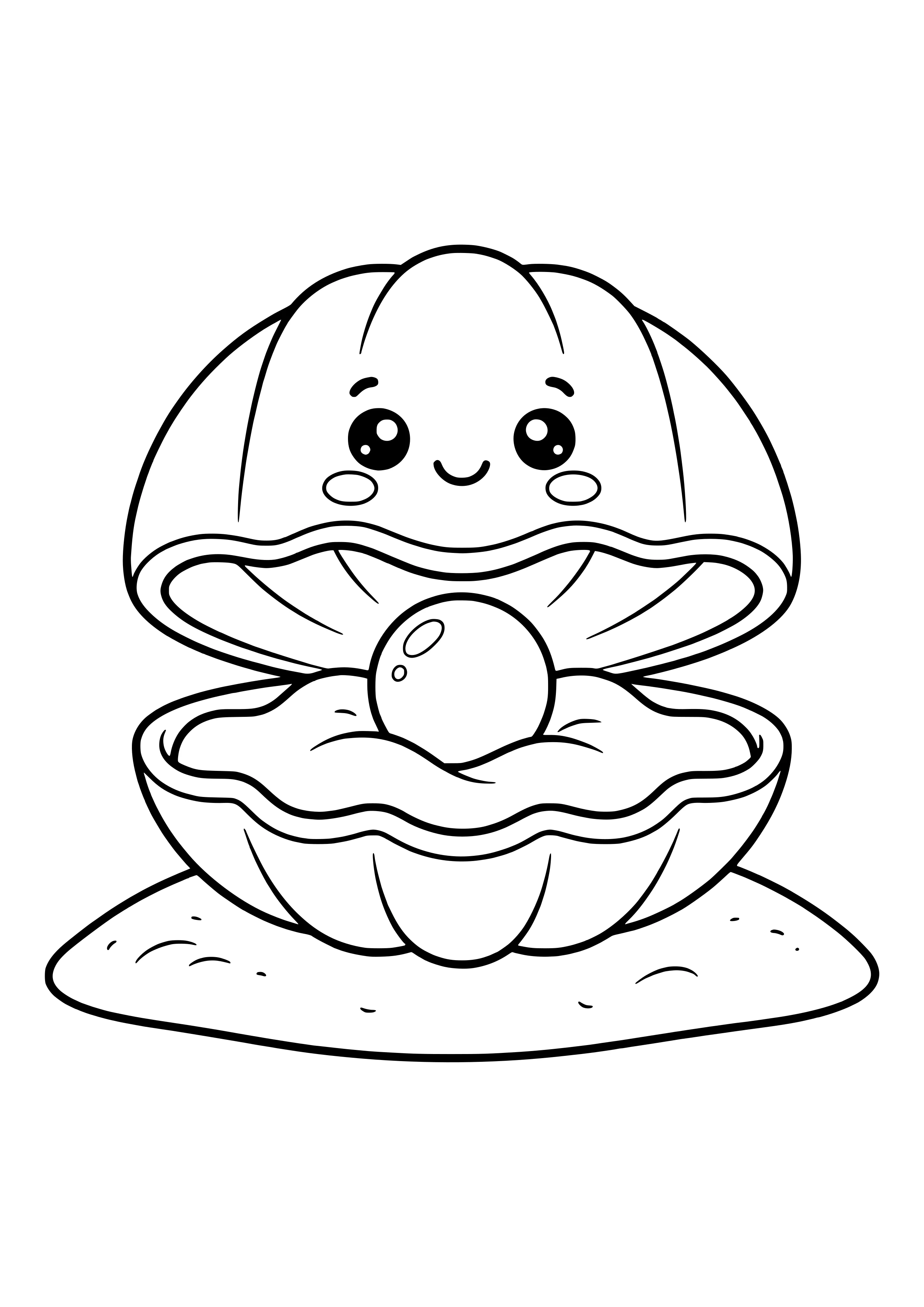
Slowly, this pearl oyster opens up, revealing a shining, precious pearl inside — a magical moment full of surprise. Our pearl oyster coloring page captures exactly this magical detail, and you can print it for free right away.
Why This Coloring Page Feels So Magical
The shining pearl inside the shell offers a wonderful element for experimenting with shimmering, bright color accents. The wavy structure of the oyster shell also invites playing with different textures. The calm, almost reverent moment of opening makes this design especially suited to thinking about how something truly precious can form from something so small, over a very long time.
A magical detail inside
Interesting texture to color
Full of surprise and joy
Great for bright pops of color
🖨️ Step-by-Step: How to Print Perfectly
Click "Print Now" and set your printer to black & white to save ink!
Use thicker paper (100–120gsm) for markers so colors don't bleed through
A quiet spot with good light — a washable tablecloth is gold for little artists!
Talk together about how a pearl might form inside an oyster!
💎 Fun Facts About How Pearls Form
While your child colors, here's a great moment for a little story: a pearl forms when a tiny foreign object, such as a grain of sand, gets into the oyster's shell and can't be removed. To protect itself from the irritating object, the oyster coats it layer by layer with a shiny substance called nacre, the same material that lines the inside of the shell. Over months or even years, these layers keep growing until eventually a shiny, round pearl has formed — a fascinating natural process of self-defense. In nature, a perfectly round pearl inside a wild oyster is actually extremely rare, which is exactly why natural pearls were once counted among the most valuable treasures in the world, long before people learned to encourage pearl formation deliberately on pearl farms. Anyone who wants to learn more about how these precious treasures form can explore the pearl profile on Wikipedia together.
🎨 Creative Idea: What to Do with the Finished Picture?
Is the pearl oyster all colored in? It deserves a place of honor on the wall! Afterward, look at real pearl jewelry together and imagine how long that pearl took to grow. ✂️
🎨 Which Colors Suit the Pearl Oyster?
For this magical design, the pearl can be especially shiny! Here are our favorite color ideas for little artists:
For the shining pearl
For the outer shell
For shimmering nacre effects
For the water around it
💡 Coloring Technique Tip: Keep the pearl mostly white and color just a small highlight spot brighter — it makes it look especially real and precious.
📅 When Is This Coloring Page a Great Fit?
This design is a true all-rounder — here are our favorite occasions:
A magical design for little ocean fans
Perfect for the theme of precious treasures
Perfect for talking about how pearls form
A calm, relaxing design
A lovely design for a small handmade gift
💎 Fun Facts About Pearls for Kids
While your child colors, read these facts out loud — kids love nature trivia!
A tiny foreign object starts it all
They give the pearl its shine
That's how long the growth takes
The pearl forms out of self-protection
Perfectly round natural pearls are very rare
🦀 Discover the Whole Ocean World!
The pearl oyster fits perfectly with our new collection of shellfish and mollusks! Combine several coloring pages and build a whole ocean world:
🌊 The Complete Shellfish Pack:
💍 How Do Natural Pearls Become Jewelry?
Before a pearl becomes a shining piece of jewelry, it first has to be carefully removed from the oyster and cleaned with great care. Since truly natural pearls are extremely rare in the wild, most pearls sold today actually come from special pearl farms, where people deliberately support the natural formation process by inserting a tiny bead into the oyster. The oyster reacts just as it would to a real grain of sand and coats the bead with layers of nacre over several years until a valuable cultured pearl has formed — a fascinating example of how people can learn from nature.
🎨 Not Just White — The Colorful World of Pearls
Many kids automatically think of bright white when they picture pearls, but in nature, pearls actually come in an amazing variety of shades. Depending on the oyster species and environmental conditions, pearls can shimmer in soft pink, cream, silvery gray, or even black. This variety of color comes from tiny differences in the composition of the nacre, making every single pearl a true one-of-a-kind treasure from nature.
Your Benefits at PureSketchy:
- Thick Outlines: Clear lines for the shell and pearl.
- Free to Print: Over 500 designs available instantly, no sign-up required.
- Safe & Fast: Instant access to PDF-optimized WebP previews.
- Suitable for All Ages: A magical, calm design.
Frequently Asked Questions (FAQ)
What age is this coloring page suitable for?
The pearl oyster works for children of any age — from broad base colors to finely shimmering nacre details.
Is the download free?
Yes, all coloring pages on PureSketchy are 100% free for personal use, preschools, and schools.
Which coloring tools work best?
We recommend light white and pearl tones for the pearl, and warm beige for the shell.
Are all oysters pearl oysters?
No, only certain oyster species can form pearls at all — most oysters people eat belong to different species.
Is there a German/English version?
Yes! You can find the German version at Ausmalbild Perlenauster öffnet sich.
Can any oyster form a pearl?
In theory, many clam and mussel species can form pearls, but only a few oyster species produce pearls of a size and quality suitable for jewelry.
How can you tell a real pearl from a fake one?
Real pearls tend to feel slightly gritty when gently rubbed against teeth, while fake pearls usually feel perfectly smooth — though this isn't a foolproof test for young collectors!