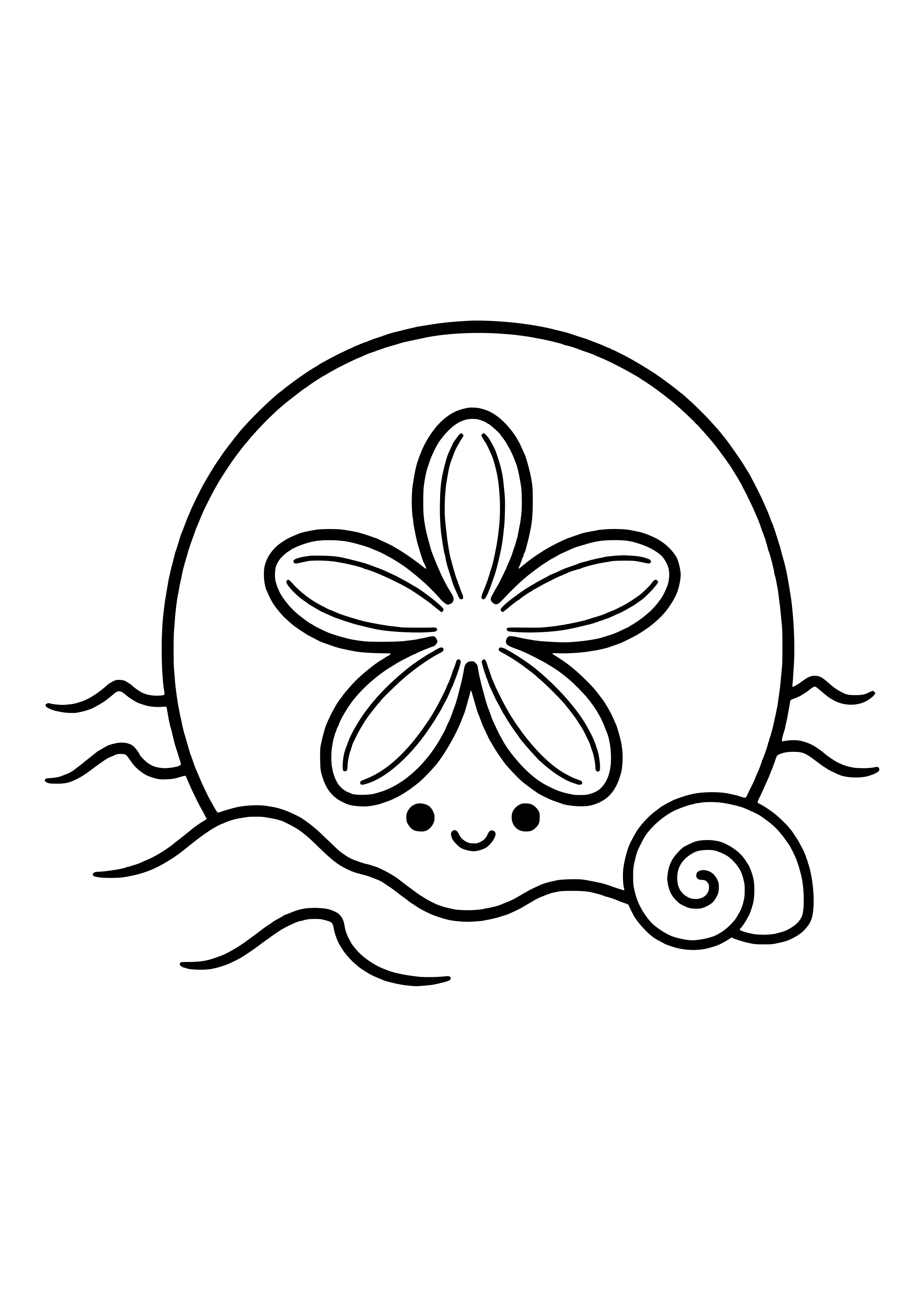
Round and flat like a big coin, this sand dollar lies in shallow, sunlit water, showing off its pretty, flower-shaped pattern on top. Our sand dollar coloring page captures exactly this special shape, and you can print it for free right away.
Why This Coloring Page Is So Special
The round, flat shape with its symmetrical flower pattern looks almost like a little coin with a design on it, and it especially appeals to younger children, who love discovering simple, clear shapes. The pretty pattern on top also offers a lovely opportunity to gain first experience with simple, repeating shapes.
Like a big coin
On the top side
Close to the surface
A simple, clear shape
🖨️ Step-by-Step: How to Print Perfectly
Click "Print Now" and set your printer to black & white to save ink!
Use thicker paper (100–120gsm) for markers so colors don't bleed through
A quiet spot with good light — a washable tablecloth is gold for little artists!
Count the five petals of the pattern together!
🌸 Fun Facts About the Sand Dollar's Secret Flower Pattern
While your child colors, here's a great moment for a little story: the pretty, flower-shaped pattern on top of a sand dollar is actually made up of thousands of tiny holes, through which small tube feet once poked out, used by the animal to breathe while it was alive. These five petal-like areas, called petaloids by scientists, are covered with especially many of these tiny breathing feet, creating the characteristic pattern we know. Sand dollars, by the way, are close relatives of sea urchins and usually burrow easily into the sandy ocean floor, where they mostly stay only half visible. Anyone who wants to learn more about the fascinating pattern of sand dollars can explore the sand dollar article on Wikipedia together.
🎨 Creative Idea: What to Do with the Finished Picture?
Is the sand dollar all colored in? It deserves a place of honor on the wall! Afterward, draw a real flower with five petals together and compare it to the pattern on the sand dollar. ✂️
🎨 Which Colors Suit the Sand Dollar?
For this calm design, the sand dollar can be kept in a soft, light sandy tone! Here are our favorite color ideas for little artists:
For the sand dollar
For the flower pattern
For the sand underneath
For the shallow water
💡 Coloring Technique Tip: Color the flower pattern a shade darker than the rest of the sand dollar — it makes the pretty shape really stand out.
📅 When Is This Coloring Page a Great Fit?
This design is a true all-rounder — here are our favorite occasions:
A calm design for little ocean fans
Perfect for beach days
Great for talking about sand dollars
Simple shapes for ages 2-4
🌸 Fun Facts About Sand Dollars for Kids
While your child colors, read these facts out loud — kids love nature trivia!
For tiny breathing feet
Both are echinoderms
Usually only half visible
Called petaloids
🪸 Discover the Whole Ocean World!
The sand dollar fits perfectly with our collection of starfish and small creatures! Combine several coloring pages and build a whole ocean world:
🌊 Discover more from the ocean world:
🏫 Ideas for Preschool, School, and Home
This design works wonderfully as a starting point for small projects about patterns, the beach, and simple shapes. In preschool, the picture pairs beautifully with a little counting and pattern exercise, where kids trace the five petals. In elementary school, this design makes a great introduction to a topic about echinoderms and their patterns, while at home it serves as an occasion to talk about real beach finds.
A counting and pattern exercise: tracing the five petals
An intro to echinoderms and patterns
Talking about real beach finds
🌸 What the Sand Dollar Teaches Us About Hidden Details
At first glance, the sand dollar looks like a simple, flat disk, but a closer look at the delicate flower pattern on top reveals a whole story of its own, about thousands of tiny breathing feet. This little observation from nature can show kids, in a vivid way, that surprisingly complicated and interesting details often hide behind seemingly simple things.
🎨 A Note on Coloring Symmetrical Patterns for Young Colorers
A design with five identical petal shapes is a great early chance to practice matching, even if the strokes themselves stay loose and imprecise. Encouraging a young colorer to use the same color on all five petals, rather than a different one for each, helps them notice the pattern's repetition — a small step toward recognizing symmetry that doesn't require any drawing precision at all.
Your Benefits at PureSketchy:
- Thick Outlines: Clear lines, perfect for little hands.
- Free to Print: Over 500 designs available instantly, no sign-up required.
- Safe & Fast: Instant access to PDF-optimized WebP previews.
- Suitable for All Ages: A simple, pretty design, especially great for ages 2-4.
Frequently Asked Questions (FAQ)
What age is this coloring page suitable for?
The sand dollar is especially great for children ages 2 to 4, thanks to its simple, round shape.
Is the download free?
Yes, all coloring pages on PureSketchy are 100% free for personal use, preschools, and schools.
Which coloring tools work best?
We recommend light sandy tones like yellow and orange for the sand dollar.
Is the pattern really made of tiny holes?
Yes, thousands of small tube feet once poked out through them, used by the sand dollar to breathe.
Is there a German/English version?
Yes! You can find the German version at Ausmalbild Sanddollar liegt im flachen Wasser.