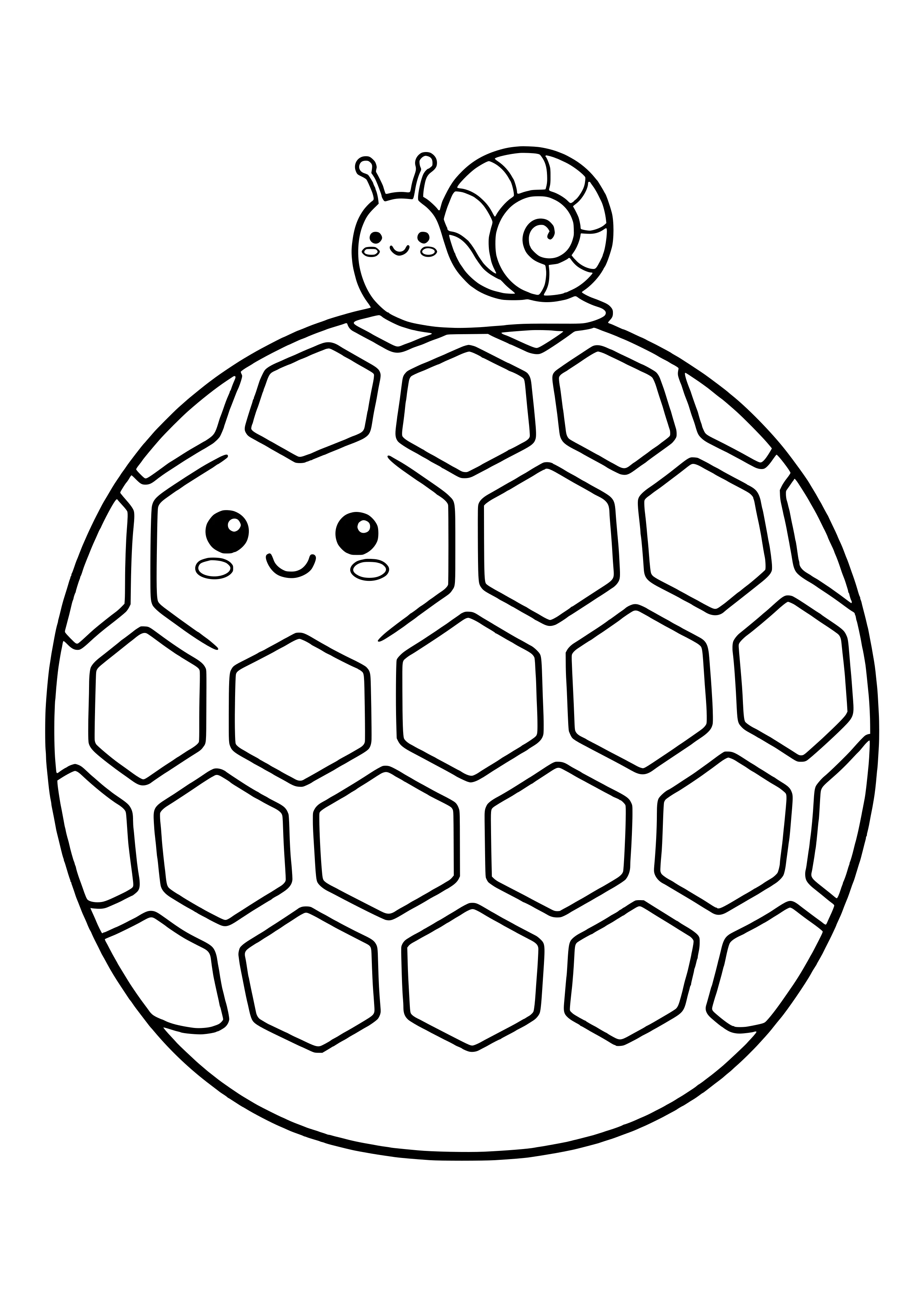
The hard, compact surface of this stony coral is covered in countless small, star-shaped patterns, packed closely together like a fine mosaic, giving the entire coral a fascinating, texture-rich look. Our stony coral coloring page captures exactly this detail-rich structure, and you can print it for free right away.
Why This Coloring Page Is So Detailed
The countless small, star-shaped patterns on the surface offer a wonderful wealth of individual sections to color, and are wonderfully suited to a calm, focused coloring experience where every detail can be considered one at a time. This mosaic-like structure clearly stands out from the smoother, broader coral shapes in our collection and brings a whole new, fascinating texture into play.
Countless small details
Packed closely together
Great for lots of detail work
Different from smooth coral shapes
🖨️ Step-by-Step: How to Print Perfectly
Click "Print Now" and set your printer to black & white to save ink!
Use thicker paper (100–120gsm) for markers so colors don't bleed through
A quiet spot with good light — a washable tablecloth is gold for little artists!
Count together how many individual star patterns you can spot on the coral!
⭐ Fun Facts About the Amazing Structure of Stony Corals
While your child colors, here's a great moment for a little story: stony corals build a hard, permanent limestone skeleton over the course of their lives, made up of countless tiny, star-shaped chambers, each housing a single polyp. These star-shaped chambers, also called corallites, form because each polyp secretes its own small limestone skeleton around itself, which over time merges with the skeletons of its countless neighbors into the characteristic, patterned overall structure. It's exactly these hard limestone skeletons of stony corals that build the solid foundation of entire coral reefs over many thousands of years, a foundation on which countless other sea creatures can in turn settle. Anyone who wants to learn more about the fascinating structure of stony corals can explore the stony coral article on Wikipedia together.
🎨 Creative Idea: What to Do with the Finished Picture?
Is the stony coral all colored in? It deserves a place of honor on the wall! Afterward, make your own little mosaic together from colorful paper scraps, quite similar to the coral's many star-shaped patterns. ✂️
🎨 Which Colors Suit the Stony Coral with Delicate Patterns?
For this detail-rich design, the many small patterns can alternate between two or three colors! Here are our favorite color ideas for little artists:
For half of the star patterns
For the other half of the patterns
For the spaces in between
For the surrounding water
💡 Coloring Technique Tip: Color the star patterns in two alternating colors — it creates a lively checkerboard feel across the entire coral.
📅 When Is This Coloring Page a Great Fit?
This design is a true all-rounder — here are our favorite occasions:
A detail-rich design for little ocean fans
Great for focused, meditative coloring
Perfect for talking about coral skeletons
Great for pattern lovers
⭐ Fun Facts About Stony Corals for Kids
While your child colors, read these facts out loud — kids love nature trivia!
Permanent and resilient
Also called corallites
Each chamber a home of its own
Form the base of entire reefs
🪸 Discover the Whole Ocean World!
The stony coral fits perfectly with our collection of coral reef and plant life! Combine several coloring pages and build a whole ocean world:
🌊 The Complete Coral Reef Pack:
🏫 Ideas for Preschool, School, and Home
This design works wonderfully as a starting point for small projects about patterns, fine motor skills, and coral structure. In preschool, the picture pairs beautifully with a little mosaic project made from paper scraps. In elementary school, this design makes a great introduction to a topic about how coral skeletons are structured, while at home it serves as a calm, focused activity for detail-loving kids.
A little mosaic project of their own
An intro to coral skeleton structure
A calm activity for detail-loving kids
🧩 What the Stony Coral's Skeleton Teaches Us About Teamwork
The patterned limestone skeleton of a stony coral forms because countless individual polyps each build only their own tiny chamber, yet together create a much larger, impressive overall structure. This little observation from nature can show kids, in a vivid way, how many small, individual contributions can together create something much bigger than any single one could achieve alone, quite similar to a shared group project.
🎨 A Note on Coloring Densely Repeated Patterns
When a picture is covered edge to edge in one repeating shape like these star patterns, working in small sections rather than trying to plan color placement for the whole surface at once tends to feel far less overwhelming. Pick a corner, work outward in a comfortable rhythm, and let the alternating colors emerge naturally as you go, rather than mapping out every single star in advance.
Your Benefits at PureSketchy:
- Thick Outlines: Clear lines for all the star patterns.
- Free to Print: Over 500 designs available instantly, no sign-up required.
- Safe & Fast: Instant access to PDF-optimized WebP previews.
- Suitable for All Ages: A detail-rich, fascinating design.
Frequently Asked Questions (FAQ)
What age is this coloring page suitable for?
The stony coral works for kids of all ages — the many small patterns are especially fun for older kids.
Is the download free?
Yes, all coloring pages on PureSketchy are 100% free for personal use, preschools, and schools.
Which coloring tools work best?
We recommend fine markers or colored pencils for the delicate star patterns, for more precision.
Does every stony coral really consist of many individual chambers?
Yes, each star-shaped chamber houses its own polyp, which builds its own small limestone skeleton.
Is there a German/English version?
Yes! You can find the German version at Ausmalbild Steinkoralle mit filigranen Mustern.