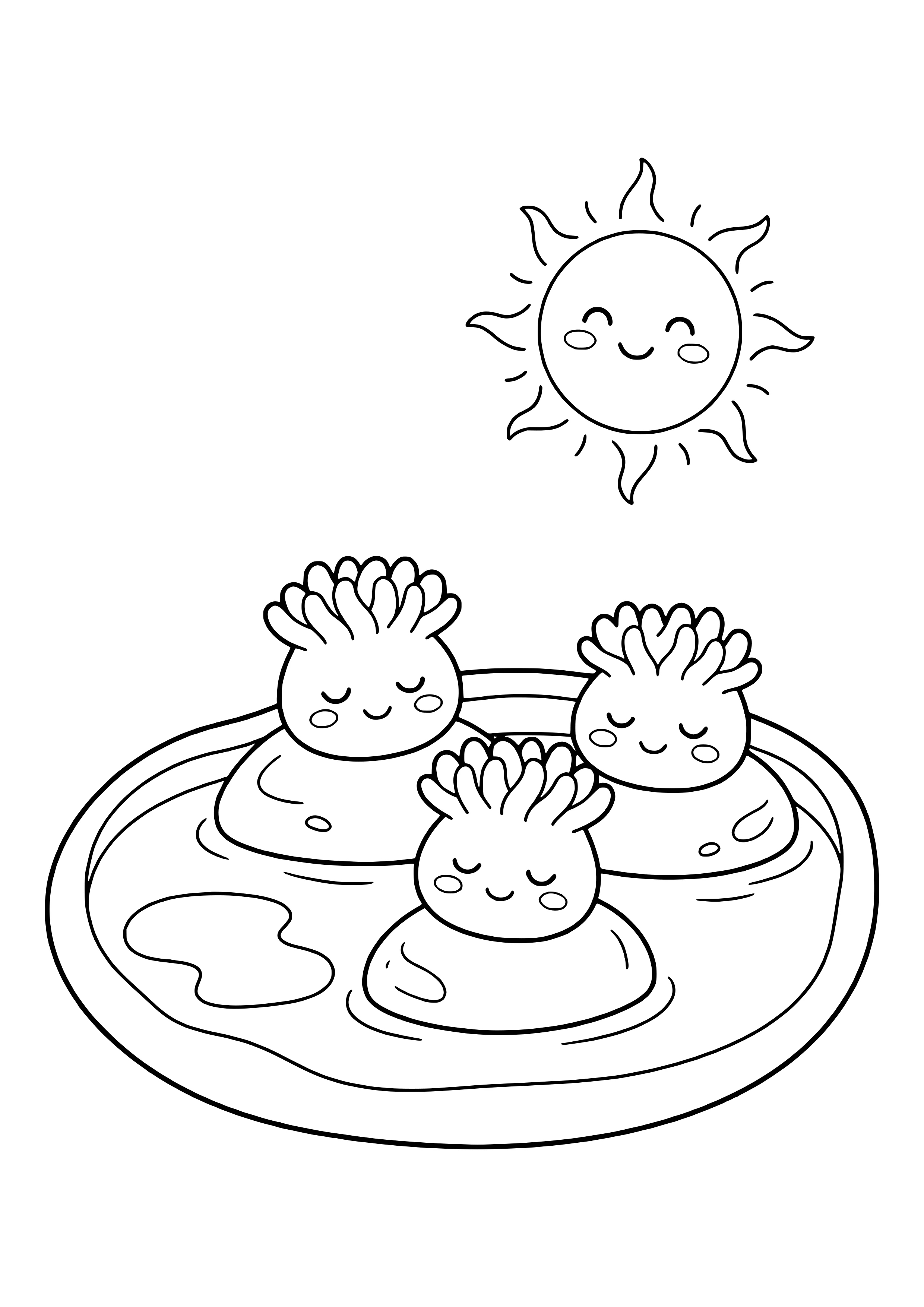
Five lumpy, contracted anemones lie close together on wet, glistening tide-pool rocks, exposed to the air after the sea has receded at low tide. Our field of anemones at low tide coloring page captures exactly this special moment along the shore, and you can print it for free right away.
Why This Coloring Page Is So Special
The contracted, lumpy shape of the anemones looks quite different from their usual flower-like, spread-out appearance underwater, showing kids a fascinating, lesser-known view of these animals. The glistening surface of the wet tide-pool rocks also offers a lovely opportunity to experiment with light reflections and different shades of gray.
A rare above-water view
Glistening surfaces to color
A behind-the-scenes glimpse
Different from the usual anemone look
🖨️ Step-by-Step: How to Print Perfectly
Click "Print Now" and set your printer to black & white to save ink!
Use thicker paper (100–120gsm) for markers so colors don't bleed through
A quiet spot with good light — a washable tablecloth is gold for little artists!
Talk about what the anemones might look like once the sea comes back!
🌊 Fun Facts About the Amazing Survival Strategy at Low Tide
While your child colors, here's a great moment for a little story: when the sea recedes at low tide, anemones living in the intertidal zone need a special survival strategy to avoid drying out while exposed to the air for hours at a time. To do this, they fully retract their otherwise spread-out, flower-like tentacles into their body and squeeze themselves into a lumpy, water-storing ball that protects their sensitive interior from drying out. As soon as the tide returns and the anemones are surrounded by water again, they unfold back into their familiar, flower-like shape within just a few minutes. Anyone who wants to learn more about the fascinating adaptations of intertidal animals can explore the intertidal zone article on Wikipedia together.
🎨 Creative Idea: What to Do with the Finished Picture?
Is the field of anemones all colored in? It deserves a place of honor on the wall! Afterward, let a sponge dry out together and watch how it plumps back up when dipped in water, quite similar to the anemone. ✂️
🎨 Which Colors Suit the Field of Anemones at Low Tide?
For this special design, the anemones can be kept in muted, natural tones, just like in the real intertidal zone! Here are our favorite color ideas for little artists:
For the contracted anemones
For some anemones, for variety
For the wet tide-pool rocks
For small remaining puddles
💡 Coloring Technique Tip: Leave a few small light spots uncolored on the rocks to create the impression of glistening, wet stone.
📅 When Is This Coloring Page a Great Fit?
This design is a true all-rounder — here are our favorite occasions:
A design for little nature explorers
Perfect for talking about tides
Great for curious little scientists
A quiet, unassuming design
🌊 Fun Facts About Anemones at Low Tide for Kids
While your child colors, read these facts out loud — kids love nature trivia!
The sea recedes regularly
Protects against drying out
Within minutes once the tide returns
Completely hidden inside the body
🪸 Discover the Whole Ocean World!
The field of anemones at low tide fits perfectly with our collection of coral reef and plant life! Combine several coloring pages and build a whole ocean world:
🌊 The Complete Coral Reef Pack:
🏫 Ideas for Preschool, School, and Home
This design works wonderfully as a starting point for small projects about tides, adaptation, and observing nature at the shore. In preschool, the picture pairs beautifully with a little water experiment, where kids observe how a dry sponge plumps back up when dipped in water. In elementary school, this design makes a great introduction to a topic about tides and life in the intertidal zone, while at home it serves as a conversation starter for a trip to the beach together.
A water experiment: the plumping sponge
An intro to tides and intertidal life
A conversation starter for a beach trip
🌊 What Intertidal Life Teaches Us About Adaptation
Animals that live in the intertidal zone must adapt to dramatically changing conditions twice a day, from being fully submerged to hours of dryness under the open sky. This remarkable ability to adapt quickly shows kids, in a vivid way, that some of nature's most resilient creatures are found exactly where environmental conditions change most often and most drastically. The intertidal zone is therefore a fascinating example of the amazing flexibility of life.
🎨 A Note on Coloring Quiet, Textural Scenes
Quieter, texture-focused designs like this one, without any bright pops of color or dramatic action, are a good chance to slow down and pay close attention to surface variation instead. Try using slightly different pressure with your coloring tool across the rock surface, pressing a bit harder in some spots and lighter in others, to suggest the uneven, weathered texture of real tide-pool stone rather than one flat, uniform gray.
Your Benefits at PureSketchy:
- Thick Outlines: Clear lines for the anemones and rocks.
- Free to Print: Over 500 designs available instantly, no sign-up required.
- Safe & Fast: Instant access to PDF-optimized WebP previews.
- Suitable for All Ages: A special, nature-focused design.
Frequently Asked Questions (FAQ)
What age is this coloring page suitable for?
The field of anemones at low tide works for kids of all ages — little nature explorers especially love this unusual design.
Is the download free?
Yes, all coloring pages on PureSketchy are 100% free for personal use, preschools, and schools.
Which coloring tools work best?
We recommend muted browns and pinks for the anemones, and stone gray for the rocks.
Do anemones really contract at low tide?
Yes, they squeeze into a water-storing ball to protect themselves from drying out.
Is there a German/English version?
Yes! You can find the German version at Ausmalbild Anemonenfeld bei Ebbe.